iOS on Xiaomi. How does that even work?
An Apple logo on a Redmi, Safari and a few very particular CPU cores. A look inside ios-topaz and the details between pressing power and reaching iOS.
Take a Redmi, turn it on and an Apple logo appears. Then comes an iOS lock screen. The phone still has its Xiaomi body, but the software looks as though it arrived at the wrong address. That is a difficult clip to scroll past. I want to see what happens after unlocking it, and even more: how someone got it that far in the first place.
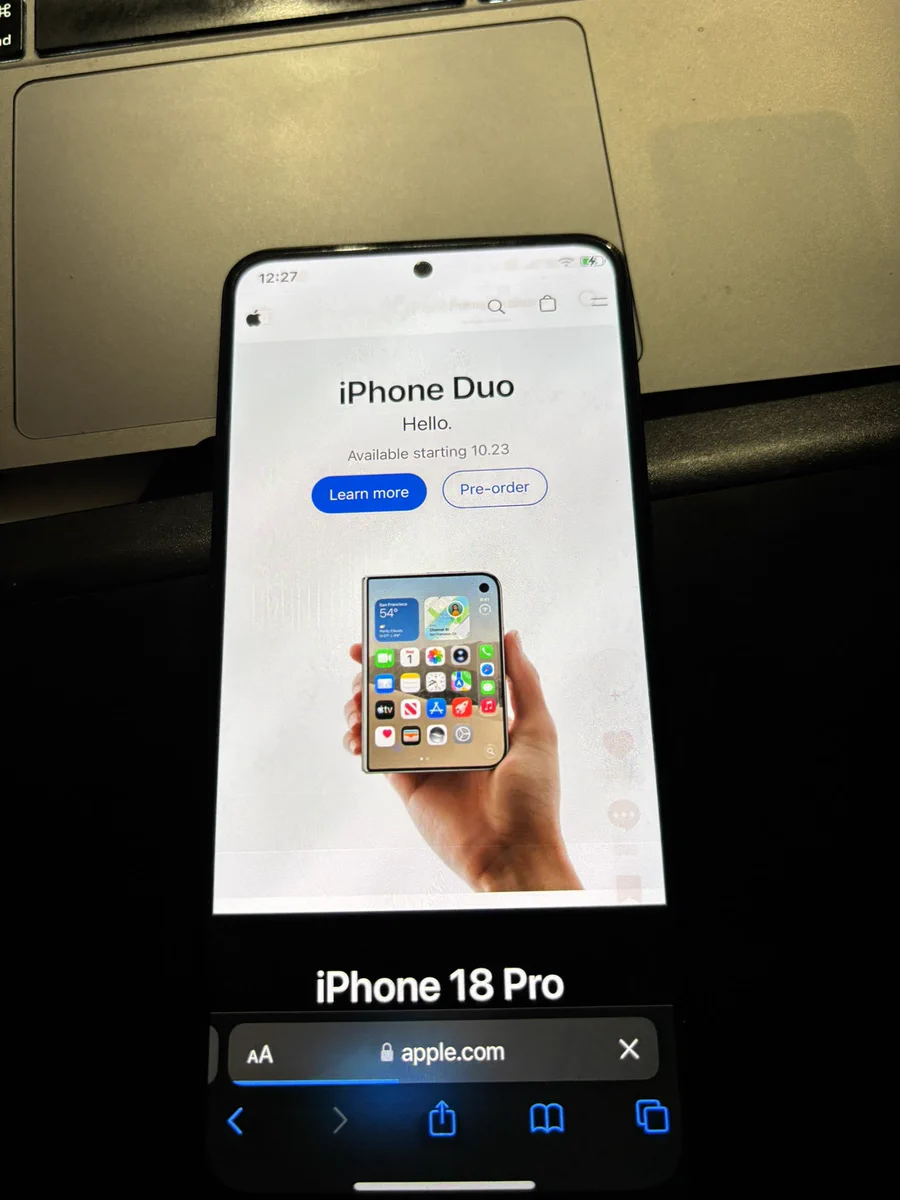
I came across the story through a reel from technology. It leads to Makr, @makrotasuss on X, and the ios-topaz project: a Redmi Note 12 4G running iPhone X iOS 16.7.16 components. The repository offers a closer look, taking you from the familiar icons to the code that makes their appearance on this screen possible.
First, you have to reach the Apple logo
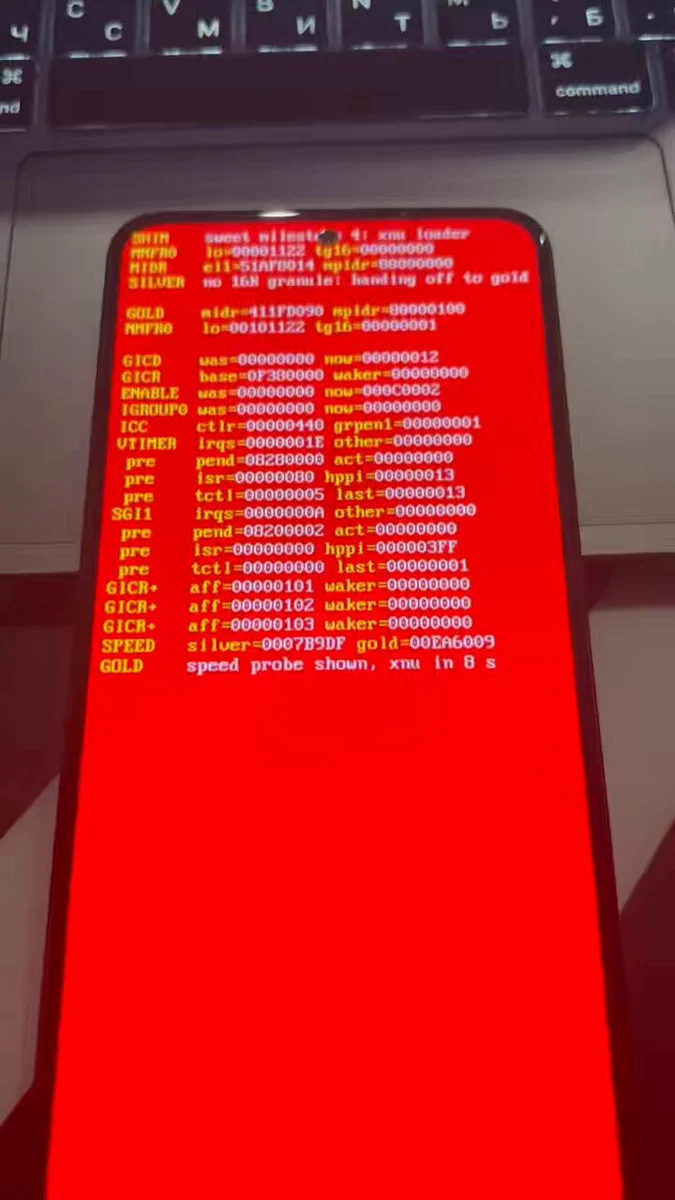
Makr's first video, published on 18 October, shows the system starting. Messages move across the screen before Apple's interface appears. For a viewer, this is a short wait. For someone working on a port, every new stage answers a question: did the previous changes finally let the system get a little further?
I like the moment when something familiar emerges from a screen full of text. Suddenly there is a visible result for work that was difficult to capture in one picture. To understand where those icons came from, though, it helps to go down a few layers.
What sits underneath the familiar icons?
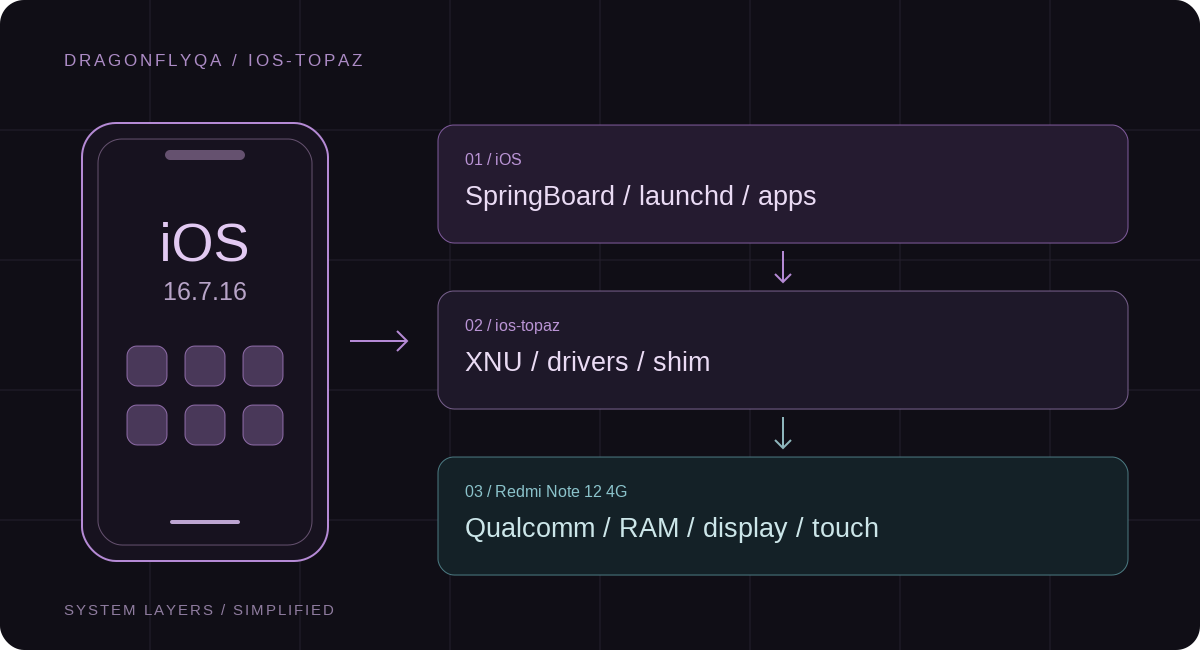
At the center of this story is XNU, the kernel used in iOS and macOS, whose source Apple publishes. A kernel manages things such as memory, processes and hardware. It provides the foundation for the rest of the software. Being able to inspect its code gives developers somewhere to begin when adapting the system to another device.
The earlier ios-sweet project combined a modified XNU with iPhone X software on a Redmi Note 10 Pro. ios-topaz carries that work to another model. Above the kernel, components include launchd, which starts system services, and SpringBoard, responsible for the home screen. That upper layer is the part most easily recognized in a video.
The Redmi still needs an introduction
The system needs information about the device it is starting on. Where is memory? How does it reach the display controller? Which processors are available? In ios-topaz, a script builds an Apple Device Tree, a hardware description prepared for XNU. It contains Redmi details alongside iPhone X product information needed by Apple's software.
Before the kernel runs, there is a small startup program called a shim. Its code places the kernel segments in memory, prepares the device description and boot parameters, and passes control to XNU. A few fields in a data structure can determine whether the phone gets any further. From the outside, we still see only a screen.
Even the choice of core matters
There is a particularly good detail in the patch for starting XNU. The early port path uses Gold cores because the chip's Silver cores cannot handle 16 KB memory pages. Pages are blocks used by the system to organize memory. Here, support for that size was a condition for running the kernel on a particular core.
Another patch deals with CPU instructions. The iPhone software uses LSE operations and LDAPR, which this Snapdragon cannot execute directly, so the port adds emulation for them. Even when both sides use ARM64, the hardware still needs to understand the particular instructions involved. A shared architecture is a starting point; the details determine whether the program can run.
This might be my favorite part of the story. The video can look like a phone running iOS. In the code, there are memory pages, core selection and missing instructions. Each seems small beside an entire operating system, yet any one can stop it before the first icon appears.
And then you can open Safari
Two days after the first video, Makr posted more material: a clip of the interface in use and a photograph of Safari opening Apple's website. After the red screen of startup messages, this is a particularly satisfying jump. You can see something people normally do on a phone without thinking. Here, that ordinary action is what draws attention.
More people stand behind that screen. The ios-topaz credits name ios-sweet and attribute parts of the graphics, display, audio and Wi-Fi integration work to HackiOS. Mesa/freedreno also appears. One phone on a desk turns out to be a meeting point for several projects and solutions that other people can adapt further.
What comes next for a phone like this?
The documentation reports an interface, touch, buttons and Wi-Fi, while still listing gaps including cameras, Bluetooth and cellular connectivity. Some sections about graphics, audio and CPU cores are inconsistent. It helps to view these materials as a record of a developing project, with a date attached to each stage.
The authors also warn that much of the security is disabled, and preparing the userdata partition erases Android user data. A familiar screen is one milestone. Protecting personal data and making the phone reliable require more work.
I am particularly curious about how much of this work can be used again. Will the next model be easier to bring up? Which fixes will help someone else? In the fruit fly story, an open map led to experiments with games. Here, public code lets us explore a part of our phones that usually goes unnoticed in everyday use.
That is probably why I stay with clips like this. A screen that seems out of place first catches the eye. Then you open the repository and discover how many interesting details fit between pressing the power button and reaching the home screen.
Worth a look
Sources checked on 3 November 2026. This account uses the creator's recordings and public code; the port was not run here on a physical phone. The ios-topaz links point to the reviewed revision.
- technology / the reel that prompted this note
- Makr / the first iOS startup on Redmi Note 12
- Makr / another interface demonstration
- Makr / phone and Safari photographs
- ios-topaz / project overview and limitations
- ios-sweet / the earlier Redmi Note 10 Pro port
- Apple / XNU source and overview
- ios-topaz / the hardware description for XNU
- ios-topaz / the loader that hands control to XNU
- ios-topaz / starting on a Gold core
- ios-topaz / missing processor instructions
- ios-topaz / credits and component origins